
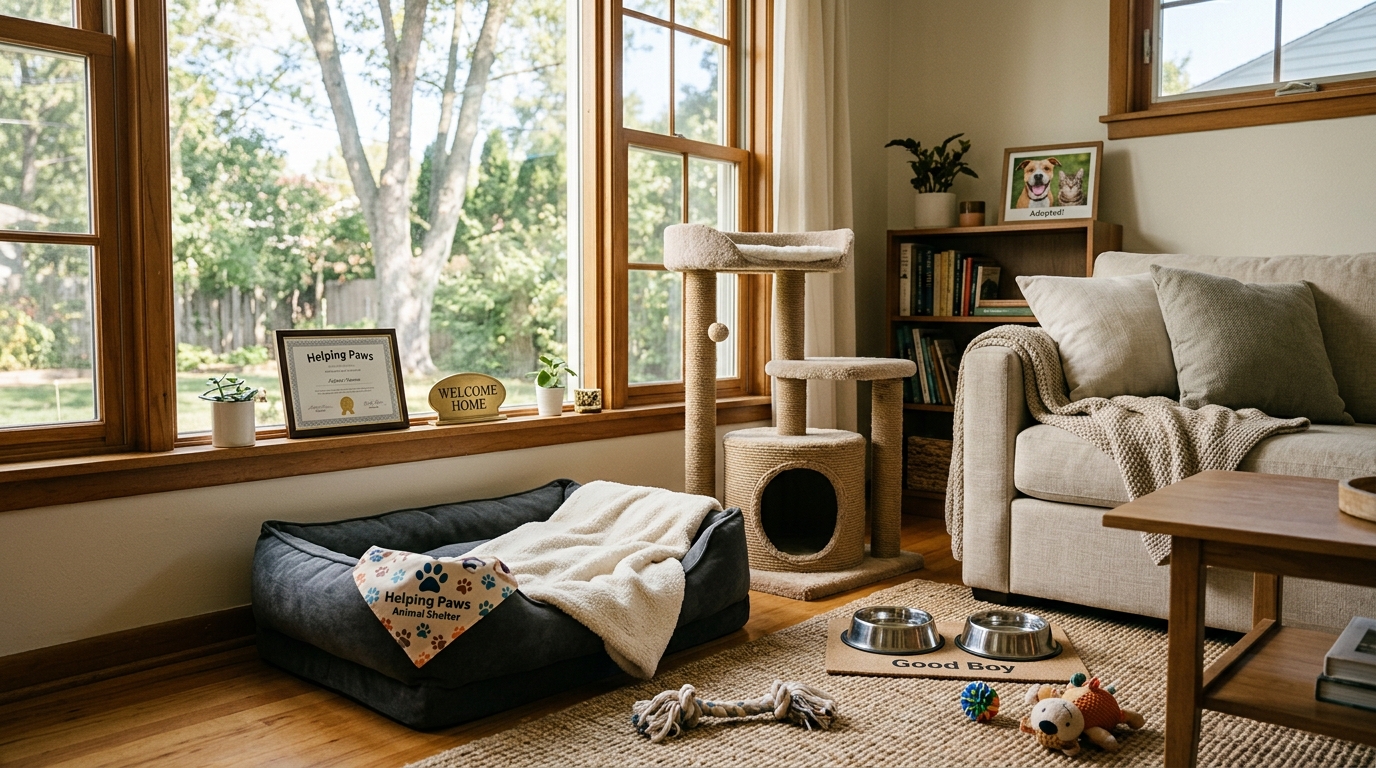
How to prepare your home for a newly adopted dog or cat in McHenry County
Bringing home a rescue dog or cat is exciting, and a little preparation can make the transition easier for everyone. Before your new companion arrives, pet-proofing your home, setting up a calm space, and planning a simple routine can help them feel safe while they adjust. At Helping Paws Animal Shelter, we encourage adopters to give new pets time, patience, and a predictable start.
Whether this is your first pet adoption or you are welcoming another family member, the goal is the same: create a secure home where your new pet can settle in at their own pace.
Start With a Safe, Quiet Space
A new home can feel overwhelming, especially for a pet that has recently experienced shelter life and other changes. Choose one quiet, low-traffic area where your dog or cat can rest without being surrounded by too much activity.
For a dog, this may be a gated room, a cozy corner with a bed, or a properly introduced crate. For a cat, a separate room with a comfortable hiding spot is often the best starting point. Include food and water, bedding, and a few toys. Cats should also have a litter box placed away from their food and water.
Let your new pet approach people and explore when they are ready. A calm, protected space is not a punishment—it is a home base that can help build confidence.
Pet-Proof Room by Room
Pets are naturally curious, and even a well-behaved dog or cat may investigate unfamiliar items in a new environment. Before bringing home one of the adoptable dogs and cats in McHenry County, take a slow walk through each room from a pet’s point of view.
- Secure medications, cleaning products, household chemicals, and small batteries in closed cabinets.
- Keep electrical cords, charging cables, and blind cords out of reach or protected.
- Remove small objects that could be swallowed, including hair ties, coins, children’s toys, and rubber bands.
- Check houseplants and remove any that may be unsafe for dogs or cats.
- Use covered trash cans or place trash where a pet cannot access it.
- Keep food off counters and tables, especially chocolate, grapes, onions, garlic, xylitol-containing products, and alcohol.
- Inspect windows, screens, balconies, and doors to make sure they close securely.
For cats, be especially mindful of open windows, reclining furniture, laundry machines, and narrow spaces behind appliances. For dogs, make sure fences and gates are secure and that visitors know to keep exterior doors closed.
Gather the Essentials Before Adoption Day
Having supplies ready helps you focus on bonding instead of making last-minute errands. Your new pet does not need everything at once, but a few basics will make the first days more comfortable.
- Appropriate food and treats, introduced gradually if you plan to change diets
- Food and water bowls
- A collar, ID tag, leash, and harness for dogs
- A carrier for cats and a safe travel plan for the ride home
- A bed, blankets, and age-appropriate toys
- A litter box, litter, and scoop for cats
- Cleaning supplies designed for pet accidents
- A scratching post or scratcher for cats and chew-safe enrichment for dogs
Ask our team about the food, routines, and comfort items your pet used while in our care. Familiarity can make the first few days feel less stressful.
Make Introductions Gradual and Positive
New pets should not be expected to meet every family member, neighbor, or resident pet right away. Keep the first day calm and limit visitors. Allow your new dog or cat to explore their designated area first, then slowly expand access to the rest of the home as they appear comfortable.
If you have children, help them practice quiet voices, gentle petting, and giving the animal space during meals, rest, and hiding time. Adults should always supervise early interactions. If you already have a dog or cat, plan introductions carefully and gradually rather than assuming they will become friends immediately.
For dogs, introductions with resident dogs are often best handled in a neutral outdoor area with calm, supervised walking before coming inside. For cats, start with separation and allow them to become familiar with each other’s scent before brief, controlled visual introductions. Go slowly and celebrate small signs of comfort.
Build a Simple Routine
Predictability helps rescue pets understand that they are safe. Establish consistent times for meals, potty breaks, walks, play, litter box cleaning, and rest. A routine does not need to be rigid, but keeping the basics steady can reduce anxiety and help your pet learn what to expect.
For a newly adopted dog, begin with frequent outdoor breaks and reward calm behavior, successful potty trips, and gentle interactions. For a cat, keep food, water, and the litter box in reliable locations, and offer short play sessions that let them engage without pressure.
It is also helpful to schedule a veterinary visit with your preferred provider soon after adoption, even when your pet has received care through the shelter. Your veterinarian can establish a baseline, answer questions about ongoing wellness, and help you plan for your pet’s individual needs.
Give Your Rescue Pet Time to Decompress
Every rescue pet adjusts differently. Some arrive ready to explore, while others may hide, sleep more than usual, have accidents, skip a meal, or seem unsure of new sounds and people. These early behaviors do not define who your pet will become once they feel secure.
Keep expectations realistic. Avoid overwhelming training goals, busy outings, or a packed social calendar during the first days. Instead, offer calm companionship, positive reinforcement, and plenty of rest. Patience is one of the most important things you can bring to a Helping Paws pet adoption.
If a dog or cat seems especially fearful, remember that progress can be gradual. Give them choices when possible, avoid forcing interaction, and use treats, play, or praise to create positive associations. Small wins—coming out from a hiding spot, taking a treat, relaxing near you, or choosing to play—are meaningful steps forward.
Know When to Reach Out for Guidance
You are not alone after adoption. Contact Helping Paws Animal Shelter if you have questions about settling in, behavior, introductions, feeding, or other adjustment concerns. Reaching out early can help you address challenges before they become more stressful for you or your pet.
For urgent medical concerns, contact your veterinarian or an emergency veterinary provider right away. For non-urgent adoption support, our team is here to offer guidance based on what we know about your pet and the transition into your home.
Preparing your space is a caring first step, but the heart of a successful adoption is time and understanding. When you are ready to welcome a new companion, view the adoptable pets at Helping Paws Animal Shelter and start the adoption process. Your new best friend may be waiting for a safe place to call home.